Product Introduction
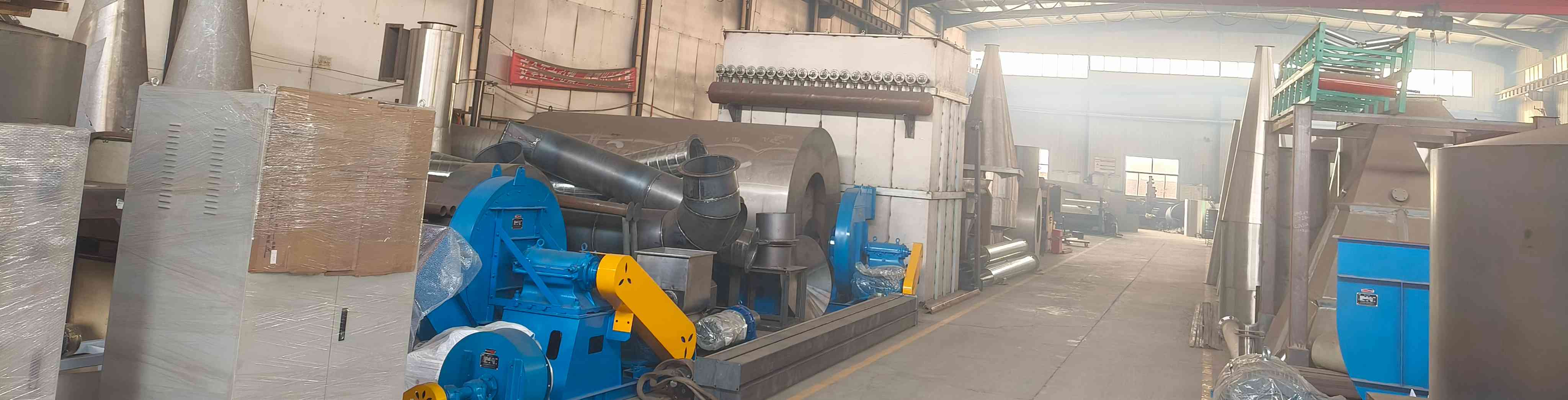
The vibrating fluidized bed dryer, developed, designed, and manufactured by Hengshui Changlong Machinery Equipment Co., Ltd., adopts a unique split-frame structure with separate upper and lower parts. During operation, the upper part of the bed does not vibrate, while the lower part vibrates, ensuring stable operation, low failure rate, convenient maintenance, and a long continuous operating life. It achieves fully automatic one-button operation, reducing labor costs for enterprises and, more importantly, eliminating human intervention delays and the associated drawbacks. Our series of vibrating fluidized bed dryers are widely applicable to drying, cooling, humidifying, and other operations involving powdered and granular materials in industries such as chemical, light industry, pharmaceutical, food, plastics, grain and oil, slag, salt production, and sugar manufacturing.
1. Principle, purpose and main features:
The vibrating fluidized bed dryer operates by a vibrating motor generating an excitation force to vibrate the bed frame. Under the influence of this excitation force in a predetermined direction, the material jumps forward. Simultaneously, hot air introduced from the bottom of the bed fluidizes the material, allowing the material particles to fully contact the hot air, thereby achieving the desired drying effect.
The vibrating fluidized bed dryer overcomes the shortcomings of ordinary fluidized bed drying, such as the formation of channeling and stagnant zones due to uneven particle size of materials, severe entrainment, easy agglomeration, uneven moisture content of products, material backmixing, and a wide range of residence time distribution.
Vibrating fluidized bed dryers are widely used for drying and cooling powdered and granular materials in various industries such as chemical, light industry, pharmaceutical, food, plastics, grain and oil, slag, distillers' grains, matches, salt production, tobacco and sugar, and compound fertilizers.
The vibrating fluidized bed dryer possesses the following primary characteristics:
1. The fluidization is uniform and stable, without dead beds or blow-through phenomena, allowing for uniform drying and cooling of products.
2. The vibration source is a vibration motor, which features stable operation, convenient maintenance, low noise, and long equipment lifespan.
3. Good adjustability: The thickness of the material layer, the residence time of the material in the machine, and the amplitude change of the bed can be adjusted steplessly within the design range.
4. Wide applicability, capable of adapting to materials with different specific gravities, particle sizes, moisture contents, and moisture forms.
5. It causes minimal damage to the surface of materials and can be used for drying fragile materials. Even if the material particles are irregular, it does not affect the working effect.
6. The operating environment is clean and suitable for continuous operation.
7. High thermal efficiency and good energy-saving effect, saving 30% to 60% energy compared to general drying devices.
II. Operating conditions and working environment for product usage:
The heat source of the vibrating fluidized bed dryer can be steam (or heat transfer oil) heat exchangers, hot air furnaces, and oil-fired or gas-fired flue gas furnaces, with hot air of different temperatures used according to different materials. The motor used in the equipment operates on an AC power supply of 380 volts.
The vibrating fluidized bed dryer, cyclone separator, and bag filter should all be installed indoors to reduce heat loss during drying and condensation on the interior walls and filter bag surfaces. If the cyclone separator or back-pulse bag filter can only be installed outdoors, external insulation layers should be added to the connecting pipes and equipment.
III. Model and Technical Parameters of Vibrating Fluidized Bed:
001.jpg
IV. Main structure of the product:
The material is quantitatively fed into (or manually or by other means added to) the inlet of the vibrating fluidized bed dryer by a spiral feeder. The hot air generated by a heat exchanger (or other heat source equipment) passes through the lower box of the dryer, mixes with the material through an orifice plate, and exchanges heat and mass to complete the drying process. The product is discharged from the outlet of the dryer. Fine product particles are discharged from the upper end of the dryer with the exhaust air, undergo a first gas-solid separation through a cyclone separator, and then undergo a second gas-solid separation through a bag filter.
V. Lifting and storage:
When lifting and transporting the vibrating fluidized bed dryer, collision should be avoided to prevent the bed plate from bending and the lower box from twisting, which may affect the vibration stability during operation.
2. When lifting and transporting the cyclone separator, care should be taken to avoid impacting the cylindrical and conical bodies, which could lead to deformation and affect the gas-solid separation efficiency of the internal rotating airflow.
3. When lifting and transporting the back-blowing bag filter, care should be taken to prevent deformation caused by the collision between the cylindrical and conical bodies, which could affect the gas-solid separation efficiency of the internal rotating airflow. It is also important to avoid deformation of the bag filter frame and damage to the filter bags during transportation.
4. During the lifting process of various fans, it is necessary to avoid impacting the motor shaft and transmission shaft, which could affect the balance of the fan impeller during rotation.
5. During transportation and storage, all components should be protected from direct sunlight and rain as much as possible.
VI. Installation and Debugging:
1. The vibrating fluidized bed dryer must be installed on a horizontal foundation, with the bed frame and supports firmly secured. When the lower box is installed, the levelness of the orifice plate should be within the allowable range. The soft connecting pipes between the upper and lower boxes, as well as between the upper box and the exhaust pipe, must be sealed to ensure no air leakage or material leakage.
2. When installing the cyclone separator and the back-blowing bag filter, ensure that the central axis is vertical and the anchor bolts of the sturdy support are tightened to prevent shaking. The gap between the upper and lower valve plates of the discharge device and the overall structure should be minimized to ensure sealing, thereby minimizing the carryover of material during discharge. If the cyclone separator and the back-blowing bag filter are installed outdoors, the shell needs to be insulated (insulation is to be completed by the user).
3. The spiral feeder should be installed on a sturdy platform, ensuring that the spiral blades do not rub or collide with the inner wall of the feeding housing when the spiral shaft rotates. The reducer and electromagnetic speed regulating motor should be securely installed on the platform, and the platform supports should be firmly anchored with foundation bolts to ensure smooth operation of the reducer and electromagnetic speed regulating motor.
4. Each fan should be secured to the foundation with anchor bolts to ensure stable operation and prevent any abnormal impact sounds.
5. The heat exchanger should be placed on the foundation, with the steam inlet end higher than the drainage end, to facilitate the smooth drainage of condensate water.
6. When connecting steam pipeline flanges, a heat-resistant asbestos gasket or PTFE gasket should be placed in the middle, and consideration should be given to providing a compensating elbow or expansion pipe for thermal expansion and contraction. When connecting air duct flanges, an asbestos rope or rubber asbestos gasket should be placed in the middle. All pipeline flange connecting bolts must be tightened to ensure no steam or air leakage.
7. Check whether the voltage and frequency of the power supply are 380V (or 220V) and 50HZ. After confirming that the power supply is correct, connect it to the electric control cabinet and various electrical components.
8. Adjust the rotational speed of the screw blade shaft of the spiral feeder to ensure the feeding quantity meets the requirements during stable feeding.
9. Adjust the excitation force of the vibration motor to regulate the amplitude of the bed frame, ensuring that the amplitude matches the characteristics of the material and the velocity of the hot airflow, so as to quickly meet the fluidization requirements of the material.
10. By adjusting the position of the bolt connection holes on the vibration motor base plate and the lower box flange, the vibration direction angle can be changed, which allows for the adjustment of the drying time of materials in the vibrating fluidized bed dryer, thus meeting the requirements for the final moisture content of the product.
Adjust the steam valve of the heat exchanger to ensure that the steam supply matches the required hot air temperature and volume during drying.
12. Under the premise of ensuring the heat required for drying, adjust the valves of the fan and the inlet ducts of the vibrating fluidized bed dryer to achieve a slight positive pressure above the orifice plate when no material is added, and a slight negative pressure above the orifice plate when material is being added, while achieving uniform fluidization.
VII. Usage and Operation:
1. Before use, confirm that the voltage of the power supply meets the requirements, and ensure that there are no foreign objects inside the fans and spiral feeders.
2. Turn on the induced draft fan, blower, and steam pipeline valves to generate hot air, preheat the drying system, and simultaneously observe whether there are any air leaks at the connections. If there are any leaks, promptly tighten them (when using other heat source equipment, refer to their corresponding instructions).
3. After meeting the preheating requirements, start the induced draft fan and adjust the valves at each air inlet to ensure that the drying system is in a normal working air volume and heat state.
4. Turn on the vibration motor and observe whether the vibration of the lower box and the bed is stable. If any instability is observed, immediately turn off the vibration motor and identify the cause.
5. Turn on the electromagnetic speed regulating motor and adjust the rotational speed of the spiral blade shaft of the spiral feeder. Start adding raw materials and constantly observe whether the feeding is uniform, ensuring that the materials are quantitatively fed into the inlet of the vibrating fluidized bed dryer (when feeding by other methods, uniformity should also be strived for).
6. Turn on the motor for the reducer of the back-blowing bag filter and the back-blowing fan, so that the bag filter starts to operate.
7. Observe whether the product discharge from the outlet of the vibrating fluidized bed dryer is uniform, and regularly check the moisture content and output of the product.
8. Regularly discharge the materials from the cyclone separator and the back-blowing bag filter. When not discharging, open the upper valve on the discharger and close the lower valve, allowing the materials to directly enter the hopper. When discharging, first close the upper valve and then open the lower valve, achieving the effect of air shutoff during the discharge process. The discharge interval for the cyclone separator should be shorter, while the discharge interval for the back-blowing bag filter can be longer. (Users can find the actual interval pattern during production.)
9. When the temperature is low, it is necessary to frequently observe the back-blowing bag filter for any condensation. If condensation occurs, the humidity of the hot air should be appropriately increased, and the material adhering to the outside of the bag during condensation should be removed to ensure the smooth passage of air through the bag.
10. When the drying system stops working, first cut off the power supply to the electromagnetic speed-regulating motor to prevent the spiral feeder from adding more materials (stop feeding by other means). When the discharge outlet of the vibrating fluidized bed dryer no longer discharges material, you can cut off the power supply to the vibration motor to stop the vibrating fluidized bed dryer; close the steam pipeline valve to stop generating hot air (refer to the corresponding instructions for using other heat sources), allowing the drying system to gradually cool down; after a while, you can turn off the power supply to the blower and other motors. At this point, the entire drying system has stopped working.
11. This working method involves quantitative feeding, heat exchange through a heat exchanger, two-stage dust collection, and no cooling. Depending on the material, manual or other feeding methods can be used. Hot air is supplied by a hot air furnace or other heat source equipment, with single-stage dust collection and a cooling section. Please refer to the corresponding instructions for use.
12. This manual is compiled based on conventional usage and operation procedures for users' reference. For specific materials, users should gradually accumulate experience during use to find the optimal operating parameters, so as to achieve the best working condition of the entire equipment.
VIII. Maintenance and Care:
1. Routine maintenance should be carried out every day, such as adjusting the tension of the V-belt, adding lubricating grease, and tightening the screws of vibrating parts.
2. Regularly clean the orifice plate bed of the vibrating fluidized bed dryer to eliminate blocked holes and remove accumulated material. At the same time, open the lower discharge hole to clean the leaking material under the orifice plate.
3. Regularly inspect the filter bag for any damage or loose connections, and remove any accumulated material on the outer surface of the filter bag.
4. Check the soft connection parts every two weeks for any damage, and replace them promptly if any damage is found.
5. Clean each bearing every three months and replace the lubricating grease once.
6. Regularly check whether the discharge valve of the cyclone separator and the back-blowing bag filter is tight. If any air leakage is found, repair it promptly.
7. For the maintenance and care of electromagnetic speed-regulating motors, fans, and reducers, please refer to the corresponding instruction manuals.
IX. Common faults and troubleshooting methods:
002.jpg
 ch
ch English
.jpg "Vibrating fluidized bed dryer")