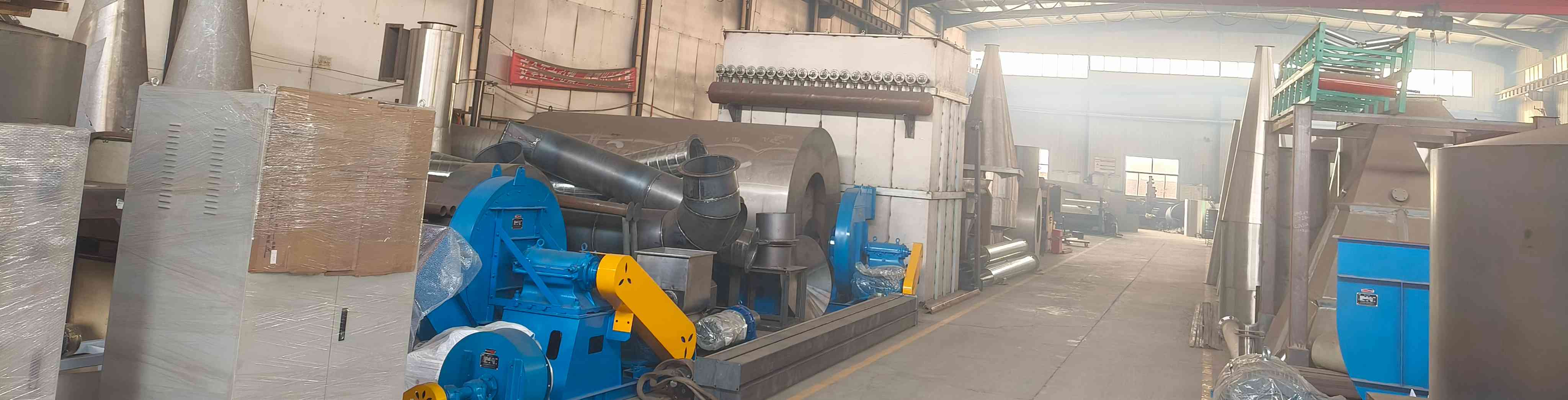
Pulse bag filter
The pulse bag filter is an efficient bag-type dust removal equipment, widely used in the industrial field.
working principle
The dusty gas enters the airlock discharge device through the air inlet, and some of the coarser dust particles fall directly due to inertia, serving as a preliminary dust collection function.
The airflow entering the ash hopper turns upward and surges into the box, further separating the heavier dust particles.
When the airflow passes through the filter bag, the dust is trapped on the outer surface of the filter bag, while the clean gas passes through the filter bag and enters the upper box, eventually collecting in the exhaust duct for discharge.
As the dust accumulation outside the filter bag increases and the equipment resistance reaches the preset pressure difference value, the system emits a signal to initiate dust removal.
Compressed air is ejected from the pulse valve and directed towards the filter bag area through the nozzle of the blowing pipe. The filter bag instantly expands and vibrates, causing the surface dust to fall off and into the airlock unloader (the material can be recycled together with the front-end material collection device via a screw conveyor).
feature
Large processing air volume: Capable of meeting the needs of large-scale industrial production.
Excellent dust removal effect: The use of compartmented air-stop pulse jet dust removal technology ensures strong dust removal capability.
High dust removal efficiency: The dust removal efficiency can reach 99.9%, making it suitable for capturing fine, dry, non-fibrous dust.
Stable and reliable operation: simple structure, high degree of automation, easy operation, and convenient maintenance.
Small footprint: Compact design, space-saving.
High cost-effectiveness: The shell is hard, resistant to high temperatures, corrosion, and acid and alkali, with a long service life and moderate price.
Application field
Mining industry: handling dust generated during mining and mineral processing.
Cement industry: used for dust purification in the cement production process.
Steel industry: handling dust generated in processes such as ironmaking and steelmaking.
Chemical industry: purifying dust-laden gas generated during chemical production processes.
Power industry: handling dust generated by coal-fired power plants, etc.
Other industries: such as food, pharmaceutical, feed, light industry, etc., for dusty gas purification and dust material recovery.
 ch
ch English
.jpg "Pulse bag filter")