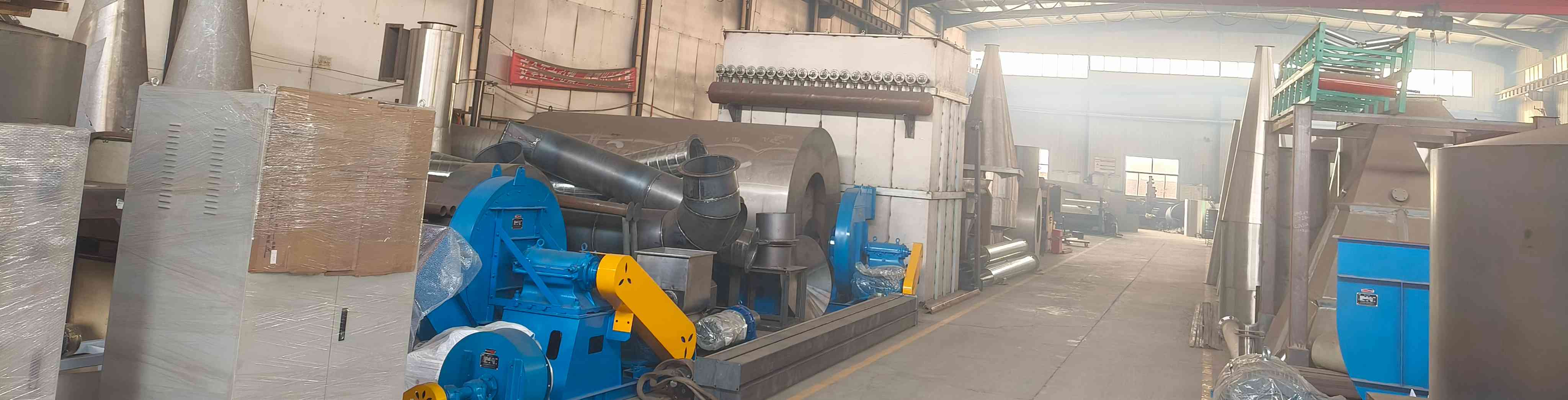
Indirect Pure Hot Air Stove
The GRL series hot blast stove is a new type of high-efficiency and energy-saving heat exchange equipment independently developed by our factory. Using coal, biomass, gas, and oil as fuels, pure and pollution-free hot air is output through radiation heat transfer, conduction heat transfer, and convection heat transfer. The pure hot air stove designed and manufactured by our company has obtained a national patent.
Due to the optimization measures and construction adopted by this series of hot blast stoves, the heat transfer and exchange efficiency have been strengthened. Therefore, this hot blast stove has a high comprehensive heat transfer coefficient, fast temperature rise, and large overall energy reserve.
The GRL series hot blast stove, as a new type of heat source equipment, can replace steam heat exchangers, thermal oil heat exchangers, and air electric heaters. It has the advantages of small size, easy installation and transportation, and low energy consumption; It can be widely used in drying, heating, heat preservation, dehumidification and other operations. It can be matched with cyclone flash dryer, pressure spray dryer, vibrating fluidized bed dryer and other drying equipment to maximize the efficiency of the equipment.
The following is its core information:
Working Principle:
The GRL series hot blast stove comes in two forms: separate and horizontal; Vertical coal-fired (biomass pellet) hot blast stove, which is divided into hand fired stove and machine fired stove according to customer requirements, consists of two parts: combustion chamber and heat exchanger. The high-temperature flue gas generated by the combustion chamber enters the heat exchanger and exchanges heat with the cold air sent by the blower through radiation and convection for several strokes. After the cold air is heated to a certain temperature, it is discharged to the heating equipment through the hot blast outlet of the hot blast stove; The flue gas is extracted by the smoke generator and discharged after passing through the flue gas separator and dust collector.
Hot air does not come into direct contact with materials to avoid smoke pollution, and is suitable for materials with high requirements for whiteness and impurity free properties.
feature
Pure and pollution-free: Separation of hot air and combustion products ensures that materials are not contaminated.
Efficient and energy-saving: With a large heat exchange area and high heat conversion rate, some models can achieve a thermal efficiency of over 85%.
Temperature controllable: precise adjustment of hot air temperature through PLC intelligent control system, output range: 100-450 ℃.
Special note: Our company's equipment is a multi-layer sleeve type pure metal structure (excluding refractory materials, avoiding problems such as cracking and detachment caused by different material expansion coefficients and thermal expansion and contraction of traditional equipment). Each layer of air layer sleeve is densely planted with metal fins to achieve the ultimate heat exchange efficiency. The material in the high-temperature zone is heat-resistant stainless steel (310S), which has a long service life.
Application field
Food industry: drying of milk powder, bread, biscuits, etc.
Pharmaceutical and chemical industries: drying of drugs, synthetic resins, etc.
Other fields: grain drying, wood processing, industrial heating, etc.
Strengths and Weaknesses
Advantages: High quality materials produced, wide applicability, and good environmental performance.
Shortcoming: The equipment cost is relatively high.
Selection Recommendation
Select the appropriate type based on material characteristics such as whiteness, impurities, and contamination requirements.
Considering the fuel type (coal, gas, etc.) and thermal efficiency, gas type is cleaner but more expensive.
Pay attention to the material and structure of the heat exchanger to ensure long-term stable operation.
phone : 13932815676
email : 13373385860@189.cn
telephone : 13932815676
address : No. 10, Industrial Street, Hengshui City, Hebei Province

Copyright © 2026 Hengshui Changlong Machinery Equipment Co., Ltd All Rights Reserved. ICP12345678 Sitemap website template
 ch
ch English
.jpg "Pure hot blast stove")